
Project 05 / AI-Powered PM Platform
4
with LLM automation handling task routing, status, and reporting.
- Industry
- Internal Product / AI & Automation
- Timeline
- Mar - Jul 2025
- Outcome
- role-specific portals
The Situation
Generic PM tools don't adapt to how PM, Developer, QA, and Client roles actually make decisions. Status updates and task handoffs were eating up time that should have gone into actual project work.
Each role needed a different view and different automation ??? PMs need portfolio oversight, developers need task context, QA needs validation workflows, clients need status transparency. A single generic tool couldn't serve these distinct decision-making patterns.
The engagement started because internal project management had become overhead instead of support. The team was spending more time reporting on work than doing it.
The team was spending more time reporting on work than doing the work itself.
The Real Challenge
The hard part was not just building four different views. It was deciding exactly what each role needed to see, what decisions each could make, and where AI could handle the repetitive coordination that was draining human time.
We needed an automation layer that could route tasks, update status, and generate reports without creating a black box that nobody trusted.
If the automation is invisible, nobody trusts it. If it's visible everywhere, it becomes noise.
What We Decided
Each structural choice was made to change the operating model, not just the interface. The technical shape had to earn its place by improving how the business made decisions under pressure.
- Role-specific portals
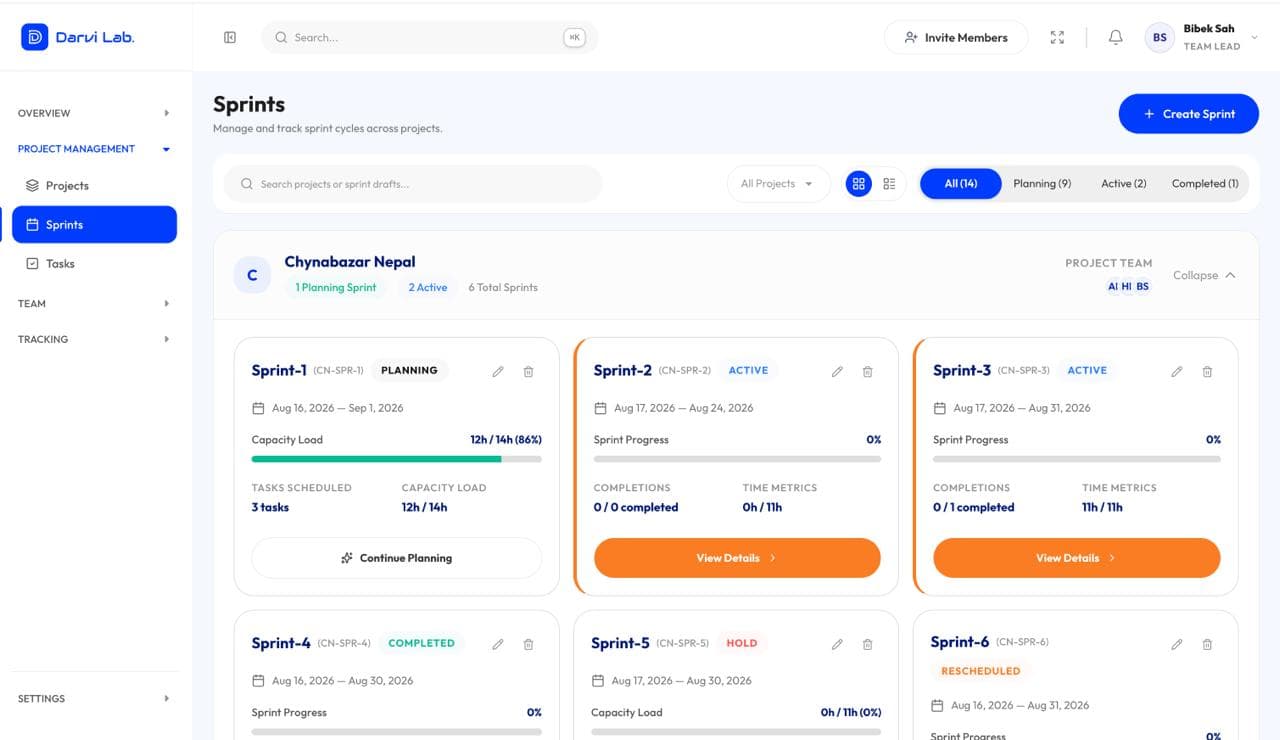
- Built four distinct portals ??? PM, Developer, QA, and Client ??? each showing exactly the information and actions that role needs. Business reason: every team member works from their own context instead of navigating a generic interface.
- LLM automation layer
- Integrated an LLM-powered automation layer that handles task routing, status updates, and report generation directly inside the workflow. Business reason: repetitive coordination work is handled by AI, freeing the team for actual project work.
- Transparent automation
- Every AI action is visible and auditable ??? task routing decisions, status changes, and report generation all show their reasoning. Business reason: trust in the system came from visibility, not from hiding the automation.
The Outcome
Four role-specific portals are now live and serving distinct workflows. PMs see portfolio health, developers see task context, QA sees validation status, and clients see transparent progress ??? each without the noise of the other views.
AI automation now handles real task routing, status updates, and reporting in daily internal use. The team spends time on project work instead of communicating about project work.
The deeper change is that project management became invisible infrastructure. The system handles coordination so the team can focus on execution, and every automation action is visible enough to trust.
Client Perspective
The team spends time on project work now, not on telling people what's happening with project work.
Working on something like this?
If the system is growing faster than the decisions inside it, we can help identify what should change and what needs to hold.
Start a conversationfunction-specific access tiers
Needed structured, org-wide training delivery across very different user roles.
HumanEdge LMS
5 function-specific tiers · Full UAT documentation · Smooth organization-wide rollout
UGC-QAA certified engineering college
Nepal's first UGC-QAA certified engineering college needed a site reflecting that credibility.
NIET College
UGC-QAA accreditation reflected · Only Biomedical Engineering in Nepal · CMS for college maintenance